محصولات
Contact Us to Place Your Order
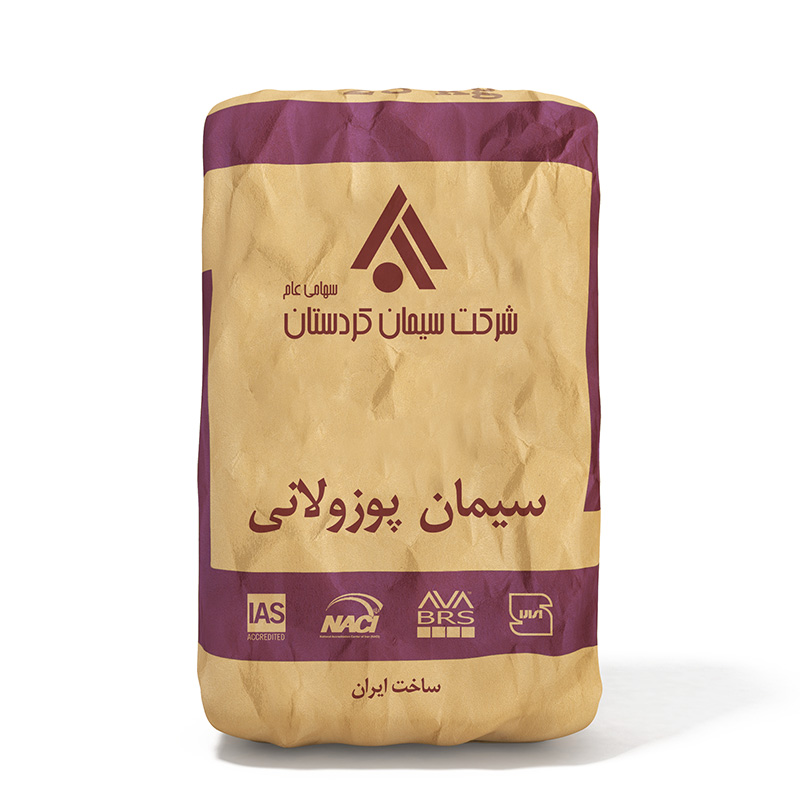
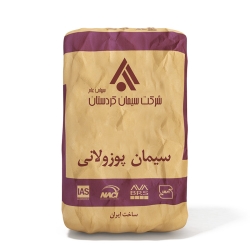
In pozzolanic cement, up to 15% of the cement (Types I, II, and V) is replaced by pozzolanic material. This type of cement is used for general applications in mortar and concrete production and is marketed with the designation “P.P”. In addition to the functional properties of the clinker used in standard cements, depending on the type and characteristics of the pozzolan, it also provides specific added benefits. Lower initial and final heat of hydration, reduced concrete permeability, improved durability in environments containing aggressive salts, absorption of cement alkalis, and extended retention of fresh concrete properties are among the advantages that make it suitable for tropical climates, mass concrete, the use of reactive aggregates, environments containing sulfate and chloride ions, long-distance transportation, and overall greater durability. In special pozzolanic cement, the pozzolanic material constitutes 15% to 40% of the cement by weight.
Restrictions on Use:
- Use with caution in cold weather or freezing conditions.
- For applications such as façade plastering and tiling, it has a lower priority compared to Type I cement.
Characteristics of Portland Pozzolanic Cement
- This cement can replace Types I and II in terms of compressive strength and can be used for general applications.
- Its heat of hydration is lower than that specified for low‑heat cements (Type V), making it suitable for mass concrete and tropical regions.
- It can be used as a low‑alkali cement and is suitable for water and wastewater channels, especially with higher pozzolan content.
Characteristics of Special Portland Pozzolanic Cement
- In coastal, desert, and saline regions with hot climates, using cement that has high mechanical strength, resistance to sulfate, chloride, and alkali attack, and low heat of hydration is essential.
- Type V and, to some extent, Type II cement are only resistant to sulfate salts. They are vulnerable to chlorides and alkalis, which commonly coexist with sulfates, resulting in low long-term durability. Fortunately, the special pozzolanic cement produced by kordestan Cement Company—manufactured according to Iranian National Standards and aligned with international standards—possesses all the required properties mentioned above.